
What if ChatGPT could not only answer your questions, but also alert you to the next big trend before it’s mainstream? Enter ChatGPT Pulse a real-time monitoring and trend surfacing layer built into ChatGPT. It lets you see what topics, plugins, and use cases are trending now, helping creators, prompt engineers, and businesses stay ahead.
In this post, you’ll get:
- A clear view of how ChatGPT Pulse works
- A comparison to Google Trends, but reimagined for LLMs
- Use cases: content ideation, marketing insights, prompt engineering
- Risks, limitations, and strategic advice
What Is ChatGPT Pulse?
ChatGPT Pulse is a real-time monitoring and trend surfacing feature inside ChatGPT that helps users detect which topics, plugins, or use cases are gaining momentum.
According to OpenAI:
- It proactively performs research overnight based on your chat history, memory, feedback, and optionally connected apps (e.g. Gmail, Calendar).
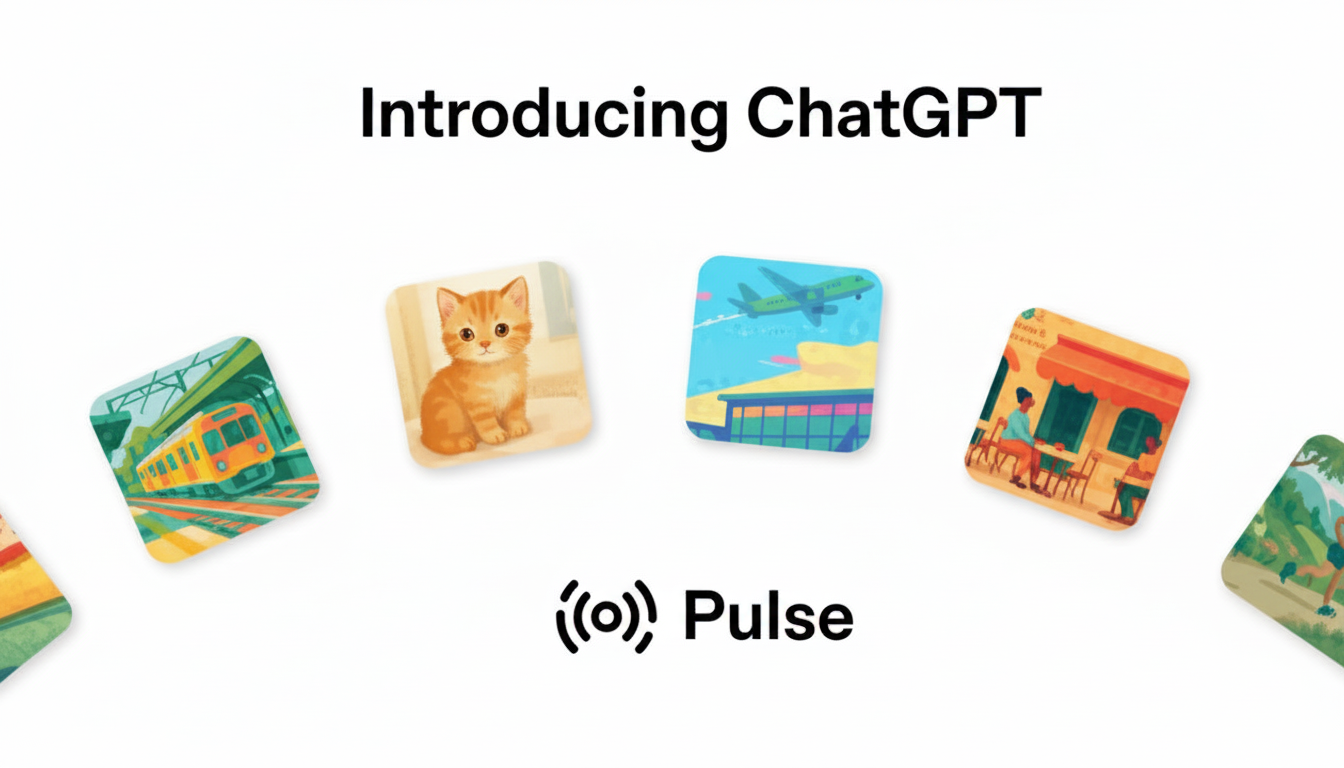
- The next morning, you receive a series of “visual card” updates — quick, digestible insights you can expand or act on.
- You can curate (tell it what you want it to track) and give feedback (thumbs up/down) so its suggestions improve.
- Integrations (connectors) are off by default, so connecting Gmail or Calendar is optional.
- It is currently in preview and only available to Pro users on mobile (iOS/Android).
In short, Pulse shifts ChatGPT from being purely reactive to being partially proactive, surfacing emerging trends and insights tailored to your interests.
How ChatGPT Pulse Works
Input signals & data sources
Pulse draws on multiple signals:
- ChatGPT memory and chat history
- Feedback you give (thumbs up / down)
- The “curate” inputs you provide (topics you want or don’t want)
- Optional connected apps (Gmail, Calendar)
- General trending / news content for relevance
Each topic or insight passes safety filters before it appears.
Processing & overnight generation
- Pulse runs “asynchronous research” overnight, synthesizing signals.
- It churns through relevant web sources, internal memory, and your custom settings.
- The output is a set of cards you receive in the morning: short visuals + summaries + links or options to expand.
Presentation & interaction
- Each card is scannable; tap to expand or ask follow-ups.
- You can save cards (so they persist) or let them expire (Pulse is “daily only” unless saved).
- Use “curate” to guide what you want more or less of.
Pulse vs Google Trends: A New Paradigm
| Feature | Google Trends | ChatGPT Pulse |
|---|---|---|
| Focus | Keyword search volume over time | Emerging topics, use cases, plugin trends |
| Data source | Web search behavior, query logs | Your chat history + web + memory + connectors |
| Personalization | Global / regional trends | Tailored to your interests and queries |
| Output format | Graphs, comparisons, raw data | Visual cards, narrative insights, actionable prompts |
| Real-time surfacing | Depends on search spikes | Potentially more anticipatory, not reactive |
Where Google Trends tells you what everyone is searching, Pulse hints at what you should pay attention to next especially in the AI / content space.
Use Cases: How You Can Use ChatGPT Pulse
Here’s how creators, prompt engineers, and businesses can benefit:
- Content ideation & topic discovery
- Spot rising subtopics before competitors do
- Derive blog, video, or newsletter ideas from trending prompts
- Prompt engineering & experimentation
- See which prompt styles or plugin combos are gaining traction
- Adapt or remix your prompts based on direction shifts
- Competitive / market intelligence
- Surface use cases your peers are exploring
- Spot feature gaps or plugin demand
- Trend validation & hypothesis testing
- Use Pulse-suggested insights as hypotheses to test / validate
- Combine with external analytics (Google Analytics, social tools)
- Strategic planning & roadmap input
- Let Pulse help generate input for your content, product, or marketing roadmap
- Use surfaced ideas for experiment sprints
Limitations & Risks to Watch
- Noise vs signal: Not every surfaced trend is valuable, false positives or niche blips will occur
- Data privacy & control: Pulse uses your memory, chat history, and optionally connected apps, transparency and control matter
- Preview / feature maturity: It’s early; limitations in scope, relevance, or mobile-only access may frustrate users
- Feedback loop bias: If you only give thumbs up to safe / easy topics, Pulse may reinforce narrow suggestions
- Overreliance risk: Using it as a crutch rather than a supplement could narrow your creative thinking
Summary & Takeaways
- ChatGPT Pulse is a proactive insight engine inside ChatGPT — surfacing trends, use cases, and topic ideas tailored to you.
- It’s the LLM-first evolution of trend tools like Google Trends, blending personalization + generative context.
- Pulse can assist creators, prompt engineers, and businesses in ideation, strategy, and competitive insight.
- But it’s early — use it as a guide, not gospel.
Conclusion
ChatGPT Pulse suggests where the future of AI content and prompts is heading not via passive reaction but via proactive insight. For creators, prompt engineers, and marketers, it’s an opportunity to surf trends ahead of the curve.
FAQs
What is ChatGPT Pulse?
ChatGPT Pulse is a proactive feature in ChatGPT that runs overnight research based on your chat history, memory, and feedback, surfacing personalized insights and trending topics via visual cards.
How is Pulse different from Google Trends?
Unlike Google Trends, which shows aggregate search volume, Pulse surfaces contextually relevant trends tailored to your interests and interactions, combining memory + external research.
Who can access ChatGPT Pulse now?
Pulse is currently available to Pro users on mobile (iOS and Android) as part of a preview.
How can creators use Pulse?
Creators can use Pulse to discover rising content topics, plugin trends, prompt strategies, and to validate hypotheses before diving deep.
What are the risks of relying on Pulse?
Risks include noise (irrelevant suggestions), feedback bias, privacy concerns, and overreliance reducing independent creativity.